You can survive weeks without food.
You can survive days without water.
But try holding your breath for three minutes.
Your body will immediately remind you what matters most.
Breathing.
It is the most essential biological function we have — and yet most people never learn how to do it properly.
Yes, You Can Breathe Incorrectly
Breathing happens automatically, so we assume we’re doing it right.
But modern lifestyles have quietly changed the way we breathe.
We sit when we work.
We sit when we eat.
We sit in cars, planes, trains, and meetings.
Hours of sitting compress the diaphragm and limit lung expansion.
Over time many people develop shallow chest breathing instead of full diaphragmatic breathing.
And that matters more than it sounds.
Your Lungs Have Much More Capacity Than You Use
The average relaxed breath brings in roughly 0.5 litres of air.
Yet the lungs can hold 4–6 litres at full capacity.
That means most people use less than 15% of their potential breathing capacity during normal daily breathing.
It’s like owning a sports car and only ever driving it in first gear.
Breathing Directly Influences the Nervous System

Breathing is unique because it sits at the border between automatic and voluntary control.
You can’t consciously control your heart rate.
But you can control your breath.
And when you change your breath, you change your physiology.
Research shows slow breathing activates the parasympathetic nervous system, which helps regulate stress and inflammation.
A widely cited study by Kox et al. (2014) demonstrated that specific breathing techniques could influence the immune system and significantly reduce inflammatory responses.
Another meta-analysis published in Frontiers in Human Neuroscience (Zaccaro et al., 2018) found that slow breathing improves:
• heart rate variability
• emotional regulation
• cognitive performance
• stress resilience
In simple terms:
Breathing is a control lever for the nervous system.
The Problem With Fast, Shallow Breathing
When breathing becomes shallow and rapid, the body interprets it as a signal of threat.
Stress hormones increase.
Heart rate rises.
Muscles tense.
This response is useful when escaping danger.
But when it becomes the default breathing pattern during everyday life, the body remains in low-grade stress mode.
Over time this contributes to fatigue, inflammation, poor concentration, and anxiety.
Why Endurance Athletes Breathe Slowly
Long-distance runners know something interesting.
If you breathe too fast, you burn out quickly.
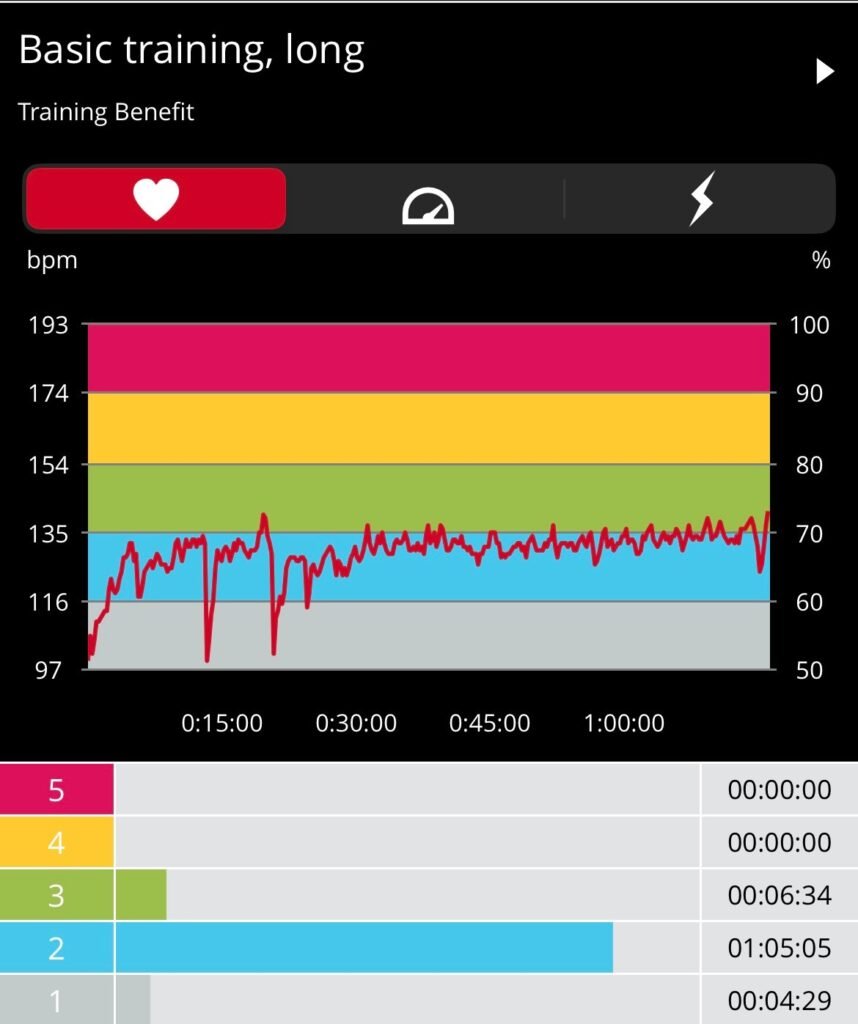
But if you slow your breathing and keep your heart rate in Zone 2, the body becomes extremely efficient.
Zone 2 training usually occurs at 60–70% of maximum heart rate.
At this intensity the body improves its ability to use oxygen and burn fat as fuel.
Elite endurance athletes spend the majority of their training time in this zone.
Why?
Because slow breathing and steady oxygen supply allow the body to perform for hours.

Breathing Can Expand Human Limits
Breathing techniques are now widely studied in sports and physiology.
One example is the Wim Hof Method, which combines deep breathing cycles with breath holds.
Participants in controlled studies demonstrated the ability to voluntarily influence their immune response — something previously thought impossible.
These breathing practices stimulate the autonomic nervous system and increase resilience to stress.
But the Most Powerful Technique Is Also the Simplest
Slow breathing.
Calm.
Deep.
Through the nose.
When breathing slows, something remarkable happens.
The heart rate stabilises.
The nervous system relaxes.
The mind becomes clearer.
It is similar to how the ocean moves — slow waves rather than chaotic splashes.
A Simple Practice

Try this:
Sit comfortably.
Inhale slowly through your nose and allow your belly to expand.
Then your ribs.
Then your chest.
Exhale slowly in reverse order.
Like a wave moving in and out.
Do this for five minutes.
Most people notice something quickly.
The mind becomes calmer.
The body relaxes.
Clarity improves.
Breathing Is the Most Underrated Performance Tool
We spend years learning productivity systems, management frameworks and fitness routines.
But the simplest lever for regulating energy, focus and stress is something we do about 20,000 times a day.
Breathing.
And when we learn to slow it down, the body often responds with something rare in modern life:
Calm strength.
Breath in,
Audrius